When Things Feel a Little Different: Understanding Pelvic Organ Prolapse
If you have noticed a feeling of heaviness, pressure or a bulge in your vagina, you may have wondered whether something is ‘wrong’. You are certainly not alone.
Pelvic Organ Prolapse is common, and it is nothing to feel embarrassed about. It can happen at any age, although it becomes more common after pregnancy and childbirth and as we get older. The good news is that there are a number of ways to manage prolapse, and many women find that their symptoms improve with the right support.
What is prolapse?
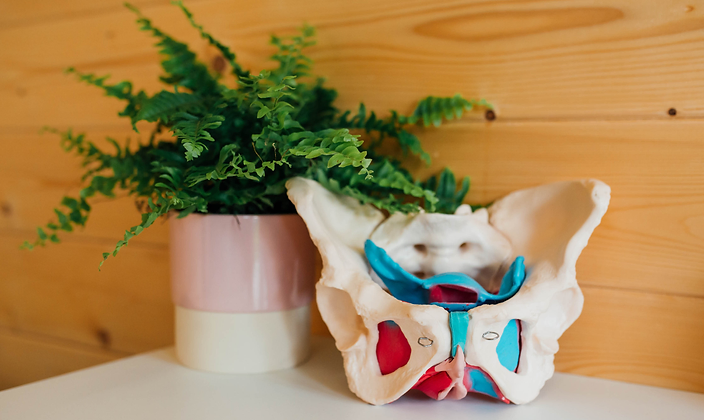
Inside the pelvis, organs such as the bladder, bowel and uterus (womb) are supported by muscles, ligaments and connective tissues. Theses structures help keep the pelvic organs in their usual position.
A pelvic organ prolapse occurs when this support becomes weaker and one or more pelvic organs move downwards, sometimes causing a bulge into the vagina. There are different types of prolapse depending on which organ(s) is/are involved.
What does a prolapse feel like?
Some women have a prolapse without noticing any symptoms at all. For others, symptoms can vary from mildly irritating to significantly affecting everyday life. It is important to know that how bothersome your prolapse feels, does not always correlated to the amount of anatomical change. We always treat how bothersome it is for you.
You might notice:
- A feeling of heaviness, dragging or pressure in the pelvis
- A bulge or lump in or around the vagina
- A sensation that something is ‘coming down’
- Difficultly completely emptying your bladder
- Needing to pass urine more frequently or experiencing leakage
- Difficulty emptying your bowels or needing to press around the vagina to help with bowel movements
- Discomfort during sex
- Lower abdominal pain or discomfort
Symptoms can sometimes become more noticeable after standing for a long time, exercising, lifting or towards the end of the day.
Why does prolapse happen?
Anything that puts strain on the pelvic floor or affects the tissues supporting the pelvic organs can contribute to prolapse.
Pregnancy and childbirth are important factors, particularly vaginal birth, but the are not the only cause. Other factors include:
- Getting older and hormonal changes around and after menopause
- Being overweight
- Long term constipation and straining
- A persistent cough
- Repeated heavy lifting
- Previous pelvic surgery
- Genetic factors that affect the strength of connective tissues
Importantly, having a prolapse does not mean that you have done anything wrong.
Does prolapse always need treatment?
No. If your prolapse is not bothersome for you, you may not need treatment at all.
If symptoms are affecting your comfort, exercise, sex, bladder or bowel function, there are several options to consider.
Pelvic Floor Muscle Training (PFMT) can improve the function of the the muscles that support the pelvic organs. Here at Holora Health, we can assess your pelvic floor muscle strength, endurance, timing and ability to relax and we can guide you with how to do your exercises correctly and effectively. Once you have a bespoke programme, consistency is key - it can take several months to notice an improvement, but it will be worth it.
Lifestyle measures which can sometimes reduce symptoms or prevent them from getting worse, such as:
- Avoiding constipation and straining
- Treating a persistent cough
- Maintaining a healthy weight where appropriate
- Learning more effective ways to lift and exercise
- Adjusting activities that consistently make symptoms worse
Hormonal treatment may be beneficial for some women, particularly around and after menopause when vaginal tissues can become thinner and drier because of falling oestrogen levels. For some women, local vaginal oestrogen may be recommended to improve vaginal symptoms and tissue health.
You do not necessarily need to stop exercising. In many cases, staying active is beneficial, although you may need to modify certain activities depending on your symptoms.
Vaginal pessary
A pessary is a small medical device placed inside the vagina to support the pelvic organs. There are different shapes and sizes, and finding the right one can sometimes take a little trial and adjustment.
A pessary can be particularly useful for women who want to remain active, and not ready for surgery, or simply prefer a non-surgical approach.
Surgery
For women with more troublesome symptoms, surgery may be an option. There are several different surgical procedures, depending on the type and severity of prolapse and your individual circumstances.
Surgery is not always necessary and it is worth discussing the potential benefits, risks and alternatives before making a decision.
When should I see someone?
If you think you may have a prolapse, you do not need to wait until your symptoms are severe. You can speak to your GP, gynaecologist or us at Holora Health. We can assess by asking about your symptoms and, if appropriate, carrying out a pelvic examination and then discussing the options with you.
You should seek medical advice if you notice a new vaginal bulge, changes in bladder or bowel function, pelvic pain, bleeding or symptoms that are affecting your quality of life.
A prolapse can look or feel worrying, but it is a common condition and there are treatments and management options available.
You don’t have to put up with it
Perhaps the most important thing to remember is that prolapse is common, treatable and nothing to be ashamed of.
You don’t have to accept discomfort, bladder or bowel problems, or stop doing the activities you enjoy. Whether you need reassurance and monitoring, pelvic floor training, a pessary, or specialist treatment, there is help available.
If something doesn’t feel quite right, talk to someone. Your symptoms are real, and getting the right advice is the first step towards feeling more comfortable and confident again.
Ready to talk it through?
If you recognise any of these symptoms, or simply want reassurance, we’d love to help. At Holora Health we offer friendly, unhurried pelvic health assessments where we’ll listen to your concerns, explain what’s going on and work with you on a plan that fits your life.
Need support with your pelvic health?
Book a free 15-minute call or an appointment with our team.